
Factory & Quality Control
Melamine Board Bubbles & White Marks: Causes and Prevention
A practical quality guide for buyers sourcing melamine-faced MDF, plywood and particle board for furniture, cabinets, wardrobes and interior projects.
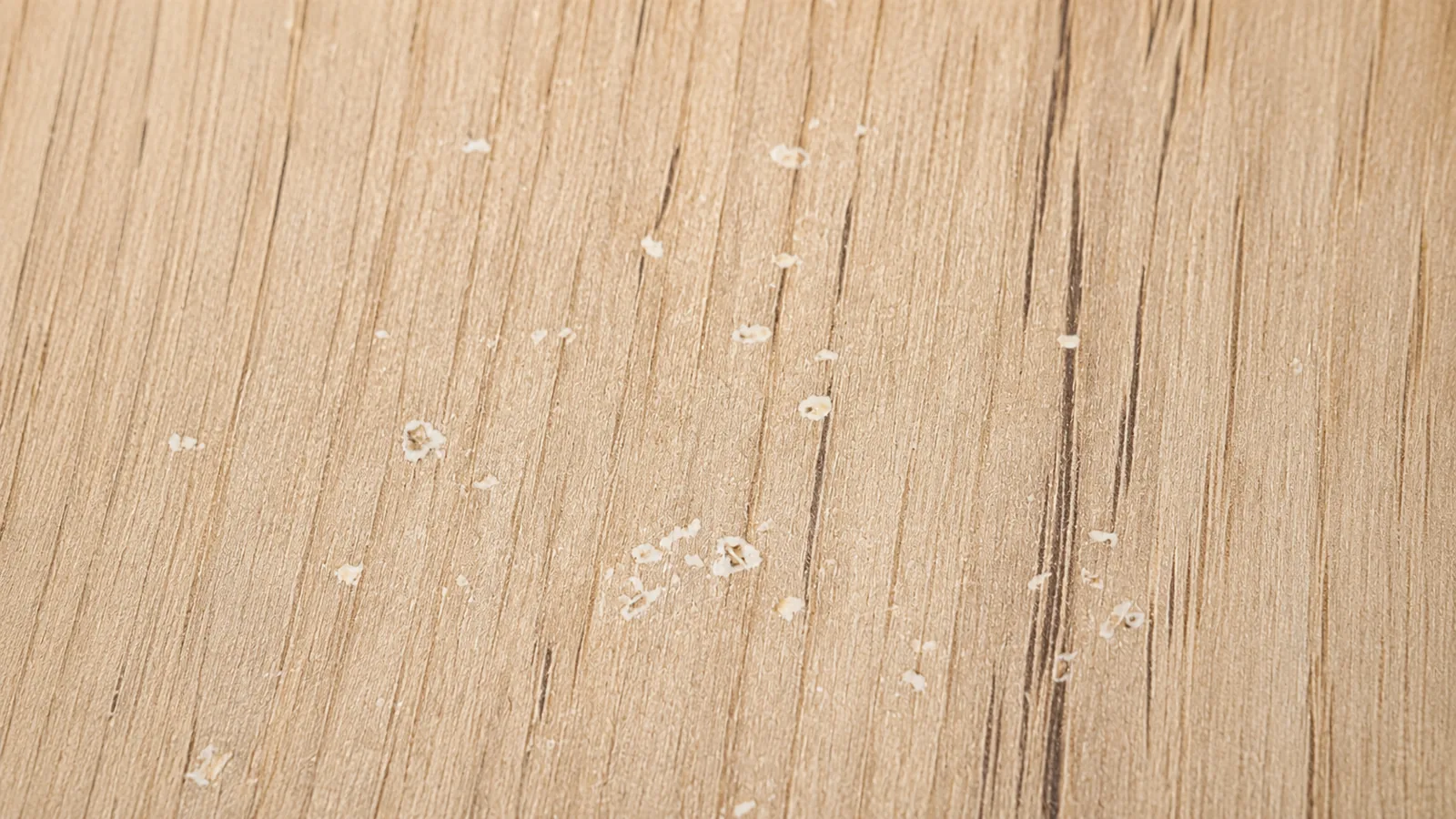
Why do bubbles and white marks appear on melamine-faced boards?
Melamine-faced boards are widely used for kitchen cabinets, wardrobes, office furniture, shelving, wall panels and other interior applications.
For furniture manufacturers, panel distributors and importers, surface quality is one of the most important factors when selecting decorative boards. A smooth, clean and stable melamine surface can help reduce material waste, production delays and complaints from end customers.
However, buyers may occasionally find bubbles, blisters, white marks, cloudy spots, uneven gloss or small raised areas on melamine-faced MDF, melamine plywood or melamine particle board.
These defects are not always caused by one single factor. In many cases, they are connected with the condition of the base board, melamine-impregnated paper, hot-pressing parameters, moisture levels, storage conditions or the compatibility between these elements.
Quick answer
Bubbles and white marks usually need a batch-level investigation.
Bubbles and white marks on melamine-faced boards are commonly related to unstable moisture in the base board, decorative paper condition, uneven resin curing, unsuitable hot-pressing parameters, poor base board flatness or improper storage.
The actual cause depends on where the defect appears, when the defect becomes visible, which base board is being used, what surface finish is applied, and how the panels are stored and processed.
What do bubbles and white marks look like?
Bubbles usually appear as raised, swollen or blistered areas on the panel surface. Some bubbles are small and scattered, while others may cover a larger area.
Certain defects are visible immediately after pressing, while others may become more noticeable after cutting, edge banding, transportation or storage.
White marks may look like pale spots, cloudy areas, whitish patches, uneven color, localized loss of gloss or water-mark-like patterns.
These defects are often more noticeable on solid-color panels, light wood-grain finishes, dark uniform colors, high-gloss surfaces, soft-touch finishes, large cabinet doors and visible furniture panels.
| Surface issue | Possible related factors | What buyers should check |
|---|---|---|
| Raised bubbles or blisters | Moisture, poor bonding, pressing control | Defect location, panel batch and processing stage |
| White or cloudy marks | Resin curing, paper condition, moisture | Paper batch, color, press records and storage |
| Uneven gloss | Temperature or pressure differences | Gloss consistency across the full panel |
| Local raised lines | Base board sanding or plywood core | Base board flatness and internal structure |
| Edge swelling | Moisture entering through panel edges | Packaging, storage humidity and edge protection |
| Surface peeling | Insufficient bonding or process mismatch | Paper adhesion, base board surface and pressing parameters |
This guide can help identify the direction of an investigation, but the final cause should be confirmed according to the actual product and production conditions.
Common causes of bubbles and white marks
1. Unstable moisture in the base board
Moisture is one of the most important factors in melamine lamination. If MDF, plywood or particle board contains excessive or uneven moisture, vapor may be generated during hot pressing.
When this moisture cannot escape properly, it may affect the bonding between the decorative paper and the base board. This can increase the risk of surface bubbles, white or cloudy marks, local swelling, uneven bonding, surface instability and delamination after processing.
The moisture condition of the base board should therefore be stable and suitable for the lamination process. Moisture distribution is also important because a panel may have an acceptable average moisture level while still containing local areas with higher moisture.
2. Decorative paper condition
Melamine-impregnated decorative paper requires suitable resin content, even resin distribution and stable curing performance.
If the paper is too dry, too wet, unevenly impregnated or incompatible with the pressing process, the finished surface may show defects. Paper storage can also affect production results because improper temperature, humidity or storage time may change the condition of the impregnated paper before pressing.
Manufacturers should check paper appearance, resin distribution, storage condition, paper batch consistency, curing performance and compatibility with the selected press cycle.
3. Hot-pressing parameters
Temperature, pressure and pressing time directly affect the bonding and curing of the melamine surface. If the pressing temperature is too high or too low, the resin may not cure correctly.
Uneven pressure may cause different areas of the decorative paper to bond differently with the base board. Important hot-pressing factors include pressing temperature, pressing pressure, pressing time, press plate condition, heating uniformity, panel loading position, cooling conditions and panel handling after pressing.
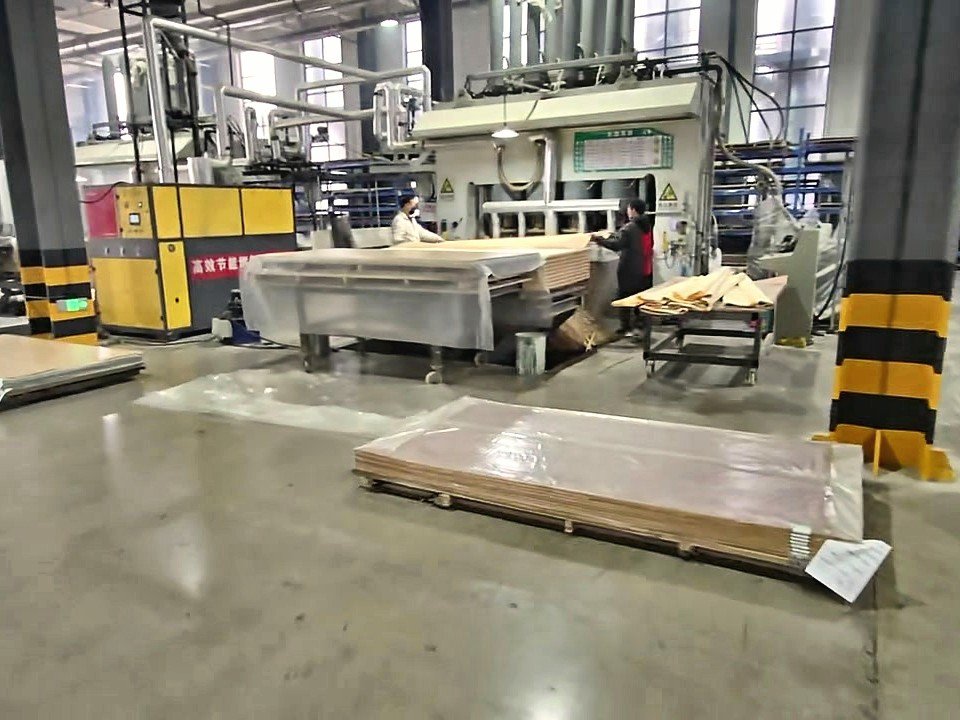
4. Base board surface quality
The condition of the base board directly affects the final melamine surface. MDF, plywood and particle board have different structures and surface characteristics.
Their surface flatness, density distribution, sanding quality, moisture stability and core condition can all influence the finished result. Unevenly sanded MDF may create visible surface variations. Particle board with unstable surface particles may affect bonding. Plywood with overlapping veneer or an unstable core may create raised areas. A rough or contaminated surface may reduce bonding consistency.
Quality control should therefore begin with the base board instead of only inspecting the finished decorative surface.
5. Poor compatibility between materials
A decorative paper may perform well with one type of base board or one pressing system but produce an unstable result with another.
The base board surface, decorative paper, resin condition, pressing temperature, pressing pressure, pressing time and surface texture plate need to work together. Even when every material appears acceptable individually, poor compatibility may still lead to bubbles, white spots or uneven gloss.
Sample production and process testing are especially important before manufacturing a large order with a new color, texture or base board combination.
6. Storage and transportation conditions
Not every surface problem originates during production. Panels may also be affected by moisture exposure, unstable stacking, direct sunlight, large temperature changes, insufficient edge protection, damaged export packaging or humid warehouse conditions.
If packaging does not provide sufficient moisture protection, water may enter through the panel edges or damaged areas. Unstable pallets may also cause panels to bend, rub or move during transportation.
For export orders, stable pallet packing, waterproof protection and proper container loading are important parts of quality control.
When did the defect appear?
The time at which a defect becomes visible can provide useful information.
Immediately after pressing
If bubbles or white marks are visible immediately after production, the investigation should focus on pressing parameters, decorative paper condition, base board moisture, press plate condition and material compatibility.
After cooling
Defects that become visible after cooling may be related to resin curing, moisture movement or stress between the decorative surface and base board.
After cutting
If defects appear or become worse after cutting, buyers should check whether moisture or internal stress was trapped inside the panel. The defect location should also be recorded because problems near the edges may have different causes from problems in the center of the panel.
After edge banding
Heat, pressure and adhesive used during edge banding may make an existing surface problem more visible. This does not always mean the edge-banding process caused the original defect. The panel condition before processing should also be reviewed.
After transportation or long-term storage
If the surface looked acceptable before shipment but defects appeared after delivery, check container moisture, packaging damage, pallet stability, temperature changes, warehouse conditions and the time between delivery and unpacking.
Boards stored in humid, hot or unstable conditions may absorb moisture through their edges or damaged packaging, so storage conditions should be included when investigating quality complaints.
What should buyers do when defects are found?
When bubbles, white marks or other surface defects are discovered, buyers should avoid using all panels from the same batch immediately.
A clear defect report helps both the buyer and manufacturer reduce unnecessary assumptions and identify the root cause more efficiently.
- Take clear close-up photos of the defect.
- Take a full-panel photo showing the defect location.
- Record the base board type, size and thickness.
- Record the color, texture and surface finish.
- Confirm the quantity of affected panels.
- Provide the production or batch number when available.
- Explain when the defect first became visible.
- Describe storage and processing conditions.
- Keep several unprocessed panels for inspection.
- Compare affected and unaffected panels from the same shipment.
What buyers should confirm before ordering
Before ordering melamine-faced MDF, plywood or particle board, buyers should confirm the main product specifications clearly. The final use of the panel should also be explained to the manufacturer.
Base board
- MDF, plywood or particle board
- Raw board grade, density requirement and thickness tolerance
- Moisture condition, surface sanding quality and glue or emission grade
Panel specifications
- Length, width and thickness
- Single-sided or double-sided lamination
- Quantity, packing requirements and destination port
Decorative surface
- Color code, wood-grain direction and surface texture
- Matte, gloss or soft-touch finish
- Synchronized texture requirement, solid color or wood-grain design and protective film requirement
Matching materials
- Edge banding color and thickness
- Texture matching and gloss matching
- Adhesive compatibility
A board used for large wardrobe doors may require stricter surface control than a board used for internal shelves or economical furniture components.
Which applications require stricter surface control?
Some applications make surface defects more visible and therefore require more careful material selection.
- Large cabinet doors
- Wardrobe doors
- High-gloss furniture
- Solid-color furniture
- Retail display panels
- Office furniture
- Wall panels
- Hotel furniture
- Visible interior panels
The larger and more uniform the visible surface is, the easier it becomes to notice small differences in gloss, color or flatness. For these applications, buyers should consider confirming both a small sample and a full-size production reference.
Why sample confirmation is important
Samples help buyers check color, texture, gloss level, surface feel, general appearance and matching edge banding. However, a small sample may not show every characteristic of a full-size panel.
Large panels can reveal surface uniformity, texture direction, gloss consistency and color variation more clearly. For important decorative projects, buyers should confirm a physical surface sample, color code or reference, texture direction, gloss level, matching edge banding, approved base board, acceptable surface standard and packaging method.
Keeping an approved sample can also make quality communication clearer during production and inspection.
How factory quality control helps reduce risk
A responsible manufacturer should not only inspect the finished board. Quality control should cover the full production process, from base board selection to export packing.
Base board inspection
The base board should be checked for surface flatness, thickness, moisture condition, sanding quality, visible damage, core stability and density consistency.
Decorative paper inspection
The factory should review paper color, surface condition, resin distribution, paper batch, storage condition and compatibility with the base board.
Pressing process control
Production records should include pressing temperature, pressing pressure, pressing time, press plate condition, production batch and operator records.
Finished surface inspection
After lamination, the panels should be checked for bubbles, white spots, uneven gloss, scratches, color variation, texture consistency, surface contamination and edge damage.
Packing and loading
For export orders, suitable packing may include waterproof outer wrapping, stable wood pallets, corner and edge protection, steel or plastic packing straps, clear product labels and stable container loading.
No production process can eliminate every possible risk under every storage, transportation and application condition. However, stable material selection, controlled production and clear inspection standards can significantly reduce avoidable problems.
Why panels and edge banding should be confirmed together
The panel surface is only one part of the final furniture appearance. Even when the melamine surface is acceptable, poorly matched edge banding may make the finished furniture look inconsistent.
Buyers should confirm the panel and edge banding together, especially for solid colors, light wood grains, dark uniform colors, high-gloss finishes, soft-touch surfaces and synchronized textures.
Important matching points include color consistency, wood-grain pattern, texture direction, gloss level, edge banding thickness and adhesive compatibility. Treating the panel and edge banding as one complete decorative system can improve the appearance of finished furniture.
Buyer inspection checklist
Before approving a bulk order, buyers can use the following checklist.
- Base board type, size and thickness confirmed
- Thickness tolerance, density requirement and moisture condition confirmed
- Glue or emission grade confirmed
- Color sample, surface texture, grain direction and gloss level approved
- Single-sided or double-sided requirement confirmed
- Matching edge banding approved
- Packing method and inspection standard agreed
- Quantity and destination port confirmed
Clear specifications reduce misunderstandings and make quality inspection more effective.
Frequently Asked Questions
Why do bubbles appear on melamine-faced boards?
Bubbles may be related to unstable base board moisture, poor bonding, decorative paper condition, uneven resin distribution, unsuitable pressing temperature, insufficient pressure or improper cooling. The exact cause should be determined according to the location, size and timing of the defect.
Are white marks always caused by poor board quality?
Not necessarily. White or cloudy marks may be related to moisture, decorative paper condition, resin curing, pressing parameters, storage conditions or the sensitivity of a particular surface finish. The base board, paper, production process and storage environment should all be reviewed before confirming the cause.
Can bubbles appear after the boards are delivered?
Yes. Some defects may become more visible after cutting, storage, temperature changes, moisture exposure or transportation. This is why production control, export packing and warehouse conditions are all important.
Should buyers approve samples before bulk production?
Yes. Sample approval helps buyers confirm color, texture, gloss, surface appearance and matching edge banding before mass production. For large orders or special finishes, keeping an approved reference sample is recommended.
Can edge banding affect the final furniture appearance?
Yes. If the edge banding does not match the panel color, texture or gloss level, the finished furniture may look inconsistent even when the panel surface itself is acceptable.
Which melamine surfaces show defects more easily?
Solid colors, high-gloss surfaces, dark uniform colors and large visible panels usually make small surface differences easier to notice.
What information should buyers provide when reporting a defect?
Buyers should provide defect photos, full-panel photos, board specifications, color and texture details, affected quantity, batch information, processing stage and storage conditions.
Conclusion
Bubbles, blisters, white marks and cloudy areas on melamine-faced boards are not only appearance problems. They may reflect the relationship between base board quality, moisture condition, decorative paper, resin curing, hot-pressing parameters, material compatibility, storage and transportation.
For international buyers, the safest approach is to confirm the product specifications, final application, surface sample, edge banding and inspection standard before production.
Working with a factory-based manufacturer that understands base board selection, decorative surface production, process control and export packing can help reduce purchasing risks and improve product consistency.
Need help with melamine-faced panels?
Send your board specification or defect photos for an initial assessment.
Our factory in Linyi, China manufactures and supplies melamine-faced MDF, melamine plywood, melamine particle board, decorative surface panels and matching edge banding.
If you are sourcing panels for furniture, cabinets, wardrobes, shelving or interior projects, send the base board type, panel size, thickness, surface color or reference, texture and finish, required quantity and destination port.
Already experiencing bubbles or white marks? Send two or three clear defect photos together with the board type, thickness, surface finish and application. We can provide an initial assessment and recommend suitable specifications for your next order.
Request Samples / Get a Factory QuotationMatch the inspection plan to the actual substrate and surface process. Product-specific selection and quotation details are available for Melamine MDF, Melamine Particle Board, Melamine Plywood.