
Panel Buying Guide
Importing MDF and Plywood from China? Here’s What to Check Before You Order
Compare MDF and plywood specifications, suppliers, inspection, shipping terms and container loading before importing wood panels from China.
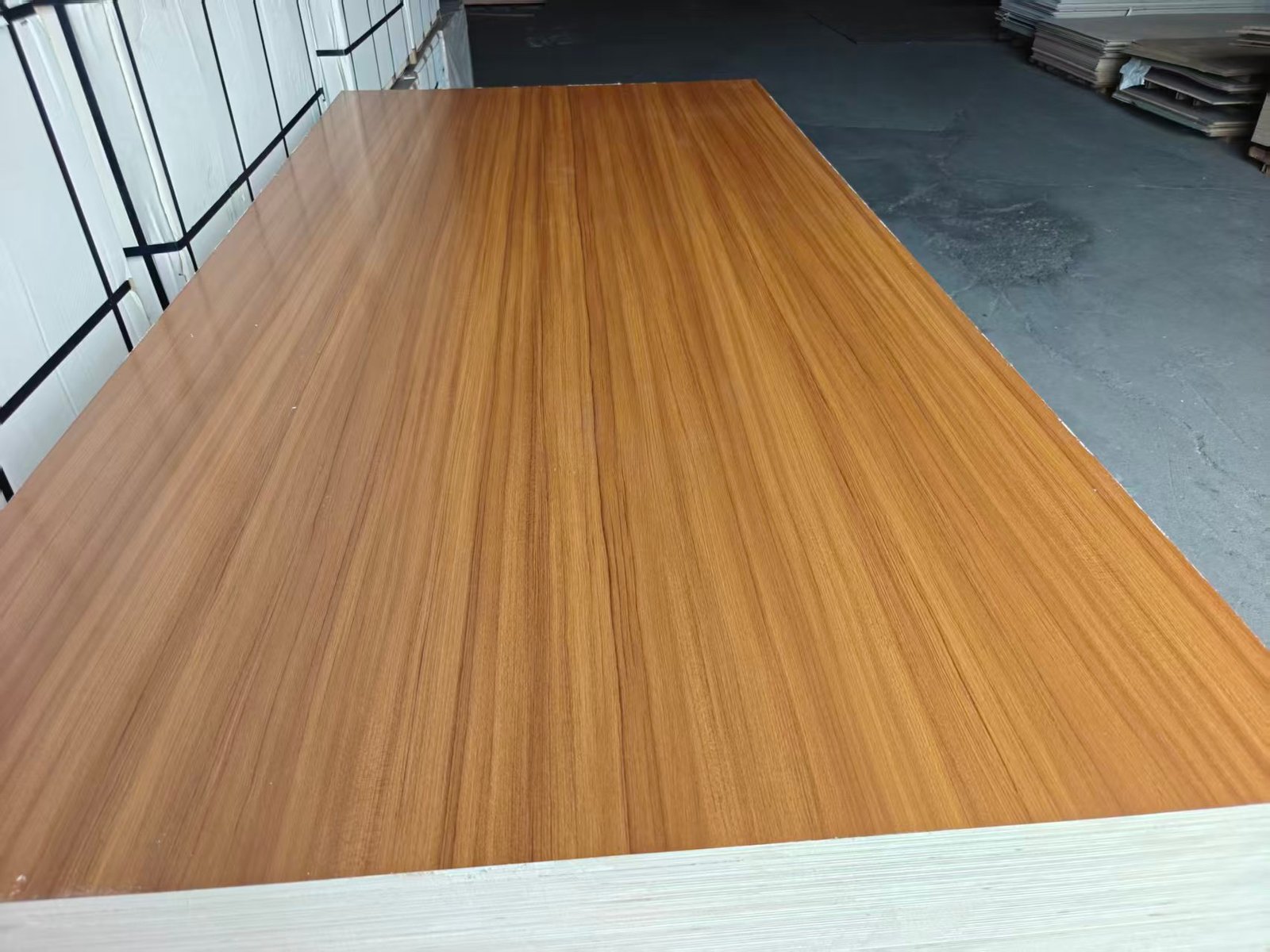
If you’re looking for an MDF or plywood supplier in China, you may already have run into a frustrating question: why do factories quote such different prices for what appears to be the same board?
Imagine asking three suppliers for a price on 18 mm plywood in 1220 × 2440 mm sheets.
The first sends you a very low quote. The second is a little more expensive. The third asks about the core, adhesive and surface grade before giving you a price.
That third supplier might seem like the most difficult one to deal with.
But those questions often determine what you’ll actually receive.
China has plenty of panel manufacturers and product options. For an overseas buyer, though, the real goal isn’t simply to find the cheapest quote. It’s to understand exactly what you’re paying for.
We won’t spend this article telling you how big China’s wood-panel industry is. Instead, let’s talk about the questions that matter when you’re buying: how to compare quotes, how to assess quality, and how to make your first shipment go more smoothly.
1. Why Can Two Panels of the Same Thickness Have Such Different Prices?
Let’s start with plywood.
Suppose you need 18 mm commercial plywood for furniture production.
The boards offered by different suppliers may differ in several important ways.
First, the core.
Poplar, mixed-core and different hardwood-core options can have different costs and performance characteristics.
Even if two sheets are both described as “poplar core,” that doesn’t mean they’re identical. Veneer quality, internal gaps, how the veneers are joined, and the manufacturing process all affect the finished board.
Then, the adhesive.
Panels used for ordinary indoor furniture may need different bonding performance from panels intended for humid conditions.
If you’re buying concrete formwork plywood, the adhesive’s water resistance becomes especially important.
And don’t forget thickness and surface quality.
You order an 18 mm panel—but will the actual production stay within the thickness tolerance you and the supplier agreed on?
Is the surface smooth? Are there visible sanding defects? Are there gaps in the core?
All of these details affect cost.
So when a quote comes in significantly lower than the others, don’t assume you’ve found the best deal straight away.
Start by asking exactly what specification is being quoted.
A low price doesn’t automatically mean poor quality. But if you don’t know why it’s low, it’s hard to tell whether you’re getting good value.
2. Before Asking for a Price, Tell the Supplier What You’ll Use the Boards For
A lot of buyers send a message like this when they first contact a Chinese supplier:
“Hello, please send me your best price for 18mm MDF.”
That’s perfectly understandable. But a little more information usually helps you get a more useful quote.
For example, are you buying MDF to resell to local furniture factories, or will you use it to make painted cabinet doors?
For furniture production, density, surface smoothness and consistent thickness may be particularly important.
If the panels will be CNC-machined, edge quality and the uniformity of the board’s internal structure also deserve attention.
And if they’ll be used in a more humid indoor environment, you may need to consider moisture-resistant MDF.
One important point: moisture-resistant MDF is not waterproof. It’s generally designed for certain indoor conditions where humidity is a concern. A green-colored core does not mean the panel is suitable for prolonged water exposure or outdoor use.
The same applies to plywood.
Furniture, interior fit-outs and concrete formwork may call for very different cores, adhesives and surface treatments.
That’s why it helps to identify the intended use before buying.
A supplier who knows the product should be able to help you compare suitable specifications for your application—not just email you a price list.
3. How Do You Ask a Chinese Supplier for a Quote You Can Actually Compare?
You don’t need to send a complicated technical document the first time you contact a supplier.
It does help, though, to make a few key details clear.
| What to specify | Example |
|---|---|
| Product type | Raw MDF / Commercial Plywood |
| Dimensions | 1220 × 2440 mm |
| Thickness | 18 mm |
| Density or core | MDF 700 kg/m³ / Poplar Core |
| Surface finish | Raw / Sanded / Melamine Faced |
| Adhesive or performance requirements | Confirm based on intended use |
| Order quantity | 1 × 40HQ |
| Destination port | Jebel Ali, UAE |
Not sure which density or adhesive you need? That’s fine.
Tell the supplier who will be using the boards and what they’ll be used for. Then ask for a suitable recommendation—and the reason behind it.
Before placing an order, however, make sure every important specification is clearly agreed.
Here’s another practical tip:
Ask different suppliers to quote against the same specification sheet.
Otherwise, Supplier A may be offering higher-density MDF while Supplier B is offering a lower-density board. Comparing the two prices alone won’t tell you much.
4. How Can You Tell Whether a Chinese Wood-Panel Supplier Is Reliable?
We don’t think you can judge a supplier only by how polished its website looks or how many products appear in its catalogue.
Those things are useful for a first impression, of course.
But before placing an order, there are a few more meaningful checks you can make.
Can they explain the product clearly?
Suppose you ask why two types of plywood are priced differently.
A supplier who understands the product should be able to explain differences in the core, adhesive, surface grade or manufacturing process.
If the answer is always just “our quality is very good,” with no specifics, it’s worth asking a few more questions.
Ask to see the actual boards and production process.
When dealing with a supplier for the first time, ask for recent, genuine photos or videos of the products you’re considering.
For example:
- The front and back surfaces of the boards
- A cut edge showing the plywood core
- A thickness measurement taken with calipers
- Production of the relevant panel type
- Packing and container-loading arrangements
Photos won’t replace a proper inspection, but they can help you understand what’s being offered.
For larger orders, a factory visit or third-party inspection may also be worth considering.
Ask whether they can keep the same quality on repeat orders.
This is particularly important for panel distributors.
Imagine your first shipment arrives in good condition and your customers are happy with it.
Then the second shipment arrives with noticeable changes in density, thickness or surface quality. Your customers will bring those problems back to you.
So rather than asking only whether a supplier can offer a discount, ask how they control consistency from one production batch to the next.
5. The Cheapest Quote Isn’t Always the Cheapest Delivery to Your Warehouse
Chinese panel exporters often quote on FOB or CFR terms.
If you receive an FOB Qingdao quote, you’ll need to understand how ocean freight, insurance where applicable, destination charges and import costs will be handled.
If the quote is CFR Jebel Ali, the seller generally pays the freight to the named destination port. That does not mean local customs clearance, duties or every destination-port charge is included.
There’s another detail buyers sometimes miss: under CFR terms, even though the seller pays the freight to the destination port, the risk of loss or damage generally passes to the buyer once the goods are loaded on board the vessel at the port of shipment.
That makes it important to arrange cargo insurance and clarify responsibilities under the contract.
When comparing quotes, work out the total estimated cost of getting the boards to your own warehouse.
If you import regularly, even a small difference in freight or local charges per sheet can add up to a significant amount across a full container.
6. How Many MDF Sheets Can You Actually Load into a Container?
It’s one of the questions panel importers ask most often.
But knowing whether you’re using a 20GP or 40HQ container isn’t enough to calculate an accurate quantity.
Board dimensions, thickness, density and packing weight all matter.
Let’s take a simple example.
Suppose you’re buying:
- MDF size: 1220 × 2440 mm
- Thickness: 18 mm
- Average density: 700 kg/m³
One sheet would have an estimated weight of about 37.5 kg.
At 500 sheets, the boards alone would weigh approximately 18.75 metric tonnes.
That doesn’t include pallets, wrapping or any other packing materials.
So while a 40HQ has more internal space than a 20GP, that doesn’t mean you can keep adding boards without considering weight limits.
With thicker or higher-density MDF, the permitted weight may become the limiting factor before the container runs out of space.
Before confirming an order, ask for a loading calculation based on the actual specification—including estimated sheet count, board weight and packing weight.
It helps with shipment planning and gives you a better idea of the freight cost per sheet.
7. A Few Things Worth Confirming Before Payment and Shipment
Importing panels doesn’t have to be complicated. Many problems arise simply because the buyer and seller didn’t agree on the details at the beginning.
For example, you order 18 mm plywood but never specify an acceptable thickness tolerance.
If some boards arrive thinner or thicker than you expected, an unclear contract can make the disagreement harder to resolve.
Before finalizing an order, check these points:
Are the product specifications clear?
Don’t list only the product name and thickness. The core, density, adhesive performance, surface quality and any applicable test requirements should also be written into the order.
What happens if there is a quality issue?
Agree in advance on inspection methods, sampling, acceptance criteria and what happens if the goods do not meet the agreed requirements.
When can the goods be inspected?
If you want a third-party pre-shipment inspection, arrange the timing with the supplier before production is completed.
Is the packaging suitable for a long sea journey?
Panels may be exposed to impacts and humid conditions during shipping and handling. Appropriate protective packing and sensible loading arrangements matter.
What does your destination country require?
Requirements for formaldehyde emissions, product documentation, customs declarations or wooden packaging vary by market. It’s better to check with your local customs broker before ordering than to discover a problem after the container arrives.
These checks don’t necessarily slow the purchase down.
Quite often, sorting things out beforehand saves much more time than dealing with a dispute at the destination port.
8. If You’re Looking for a Long-Term Wood-Panel Supplier in China
If you import MDF, plywood or other wood-based panels every year, it’s worth thinking beyond the next shipment.
You need a competitive price, of course—but you also need consistent specifications, clear communication and a supplier who can reliably follow through on repeat orders.
SOWO is based in Linyi, Shandong Province, China. With nearly 20 years of experience in the wood-panel industry, we supply MDF, plywood, particle board and decorative panels.
Based on your requirements, we can help confirm specifications, coordinate production, follow up on quality and arrange export shipments.
If you’re planning a trip to China and would like to see the products in person, you’re welcome to contact us in advance to discuss a factory visit.
And you don’t need to make a purchasing decision the first time you get in touch.
If you’re still comparing core materials, densities or thicknesses, just tell us how you plan to use the boards and which market you serve.
We can start with the specifications and help you understand the available options.
One Last Thought
Importing wood panels from China isn’t a mystery.
But two products both described as “18 mm MDF” or “18 mm plywood” can differ considerably in quality and cost.
Rather than rushing to choose the lowest quote, it’s worth taking the time to define the specification you really need—and check whether the supplier can deliver it consistently.
A good purchase isn’t just about getting the right price today. It’s about knowing what you’ll receive on your second and third orders, too.
If you’re looking for an MDF or plywood supplier, send us the product type, dimensions, thickness, order quantity and destination port.
We’ll be happy to talk through the details with you.
Discuss your panel requirements with SOWO
Tell us the panel type, size, thickness, quantity and destination. We can review the specification and prepare a quotation.
Request a Quote