
Panel Buying Guide
MDF Density Guide: 650, 680, 720 or 740 kg/m³ — Which Density Should You Choose?
Learn how MDF density affects machining, strength, weight, surface quality and cost. Compare 650, 680, 720 and 740 kg/m³ MDF for furniture and interior applications.
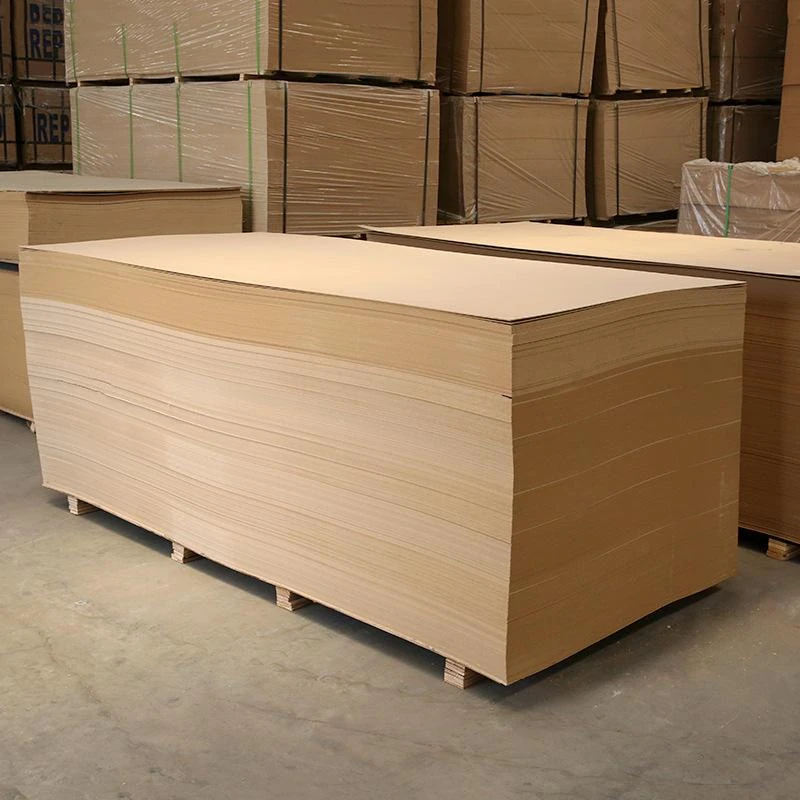
When buyers ask for an MDF quotation, thickness and size are usually the first specifications they mention. Density, however, is just as important.
Two MDF panels may both be 18 mm thick and 1220 × 2440 mm in size, but their performance and price can be very different if one is produced at approximately 650 kg/m³ and the other at 740 kg/m³.
Understanding MDF density can help buyers avoid paying for specifications they do not need—or choosing a board that is too light for the intended application.
What Does MDF Density Mean?
MDF density is normally expressed in kilograms per cubic meter, or kg/m³.
For example:
- 650 kg/m³
- 680 kg/m³
- 720 kg/m³
- 740 kg/m³
In general, a higher-density MDF panel contains more wood fiber per unit of volume.
However, density alone does not determine MDF quality.
Fiber preparation, resin content, pressing conditions, moisture control, sanding accuracy and production consistency are also important.
This means a poorly produced high-density board is not automatically better than a well-controlled medium-density board.
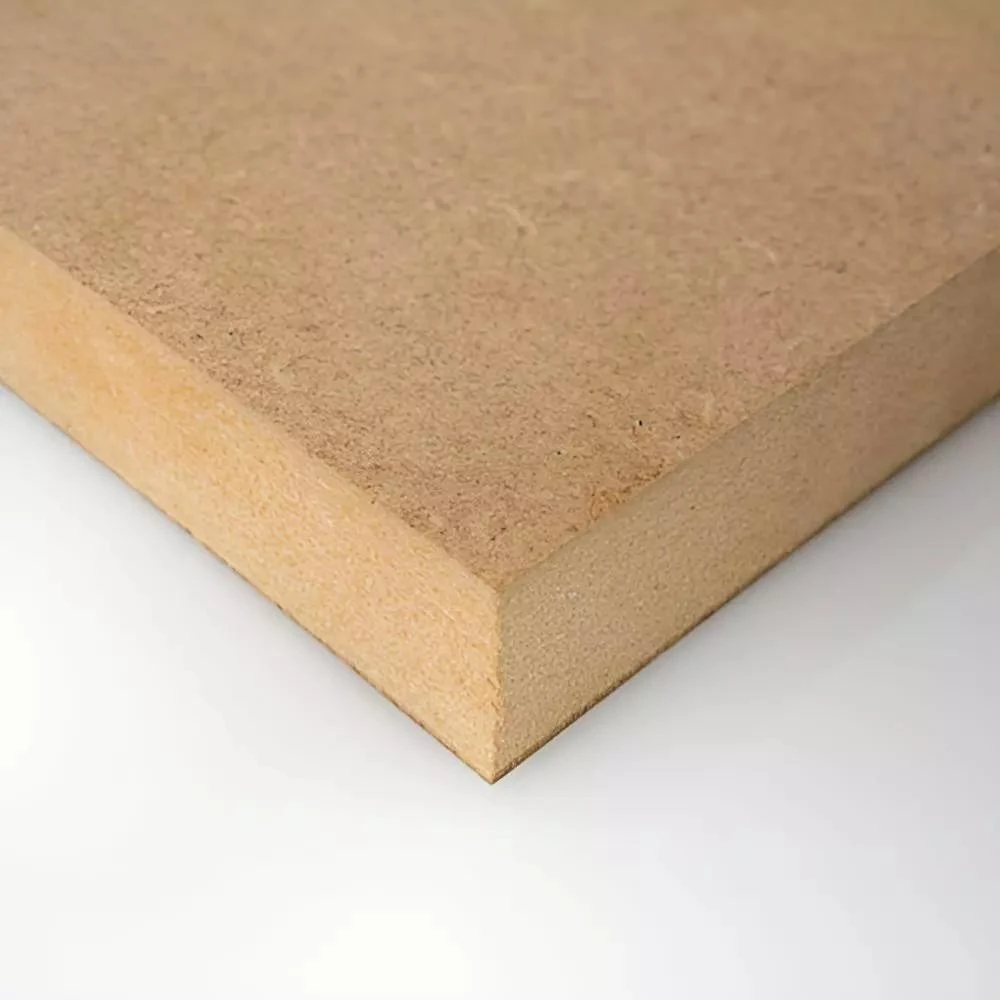
650 kg/m³ MDF
MDF around 650 kg/m³ is often selected for projects where cost and weight are important.
Possible applications include:
- General interior furniture
- Decorative panels
- Lightweight cabinet components
- Laminated furniture parts
- Projects with limited machining requirements
The main advantage is usually lower material cost and lower panel weight.
However, buyers should pay attention to edge strength and machining performance if the board will be deeply routed or repeatedly screwed.
680 kg/m³ MDF
Around 680 kg/m³ is a common specification for general furniture production.
It provides a practical balance between:
- Cost
- Panel weight
- Surface smoothness
- Machining performance
- Internal strength
For wardrobes, cabinets, shelving and laminated furniture, this density range can be suitable when the overall production quality is well controlled.
For many furniture manufacturers, 680 kg/m³ is a reasonable starting point when no unusually high mechanical performance is required.
720 kg/m³ MDF
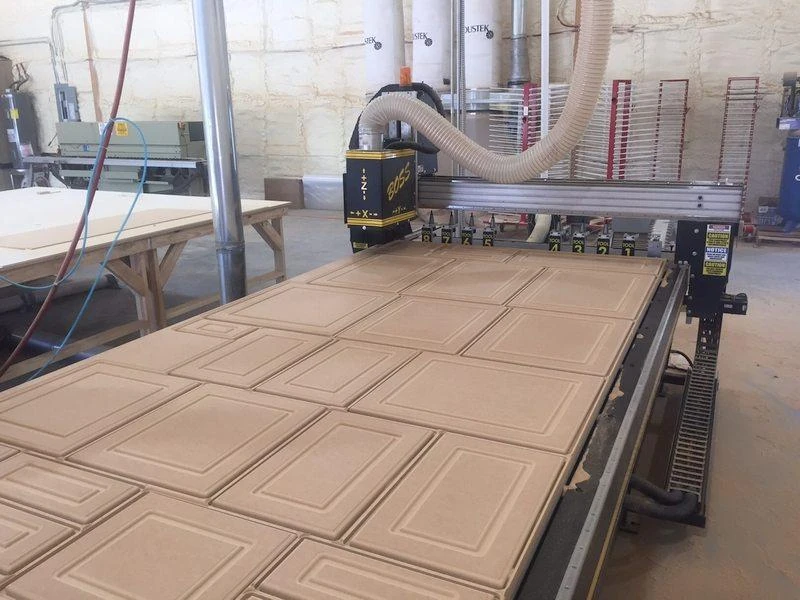
When more demanding machining or better internal consistency is required, buyers may consider MDF around 720 kg/m³.
Typical applications may include:
- Routed cabinet doors
- Decorative CNC machining
- Furniture components requiring cleaner edges
- Painted MDF products
- Higher-grade laminated furniture
A denser board generally provides more material around the cutting area, which can help produce cleaner machining results.
However, tool condition, cutting speed and MDF fiber quality also influence the final edge quality.
740 kg/m³ MDF
MDF around 740 kg/m³ is normally considered a relatively high-density specification for standard furniture applications.
It may be selected for:
- Detailed CNC routing
- Furniture components requiring higher internal strength
- Premium painted surfaces
- Decorative profiles
- Applications where edge quality is important
Higher-density MDF is also heavier.
For container purchasing, this matters because panel density directly affects the weight of each sheet and the total loading weight.
A higher-density board is therefore not always the most economical option.
Does Higher Density Always Mean Better MDF?
No.
This is one of the most common misunderstandings in MDF purchasing.
A buyer should not simply ask:
“Can you give me your highest-density MDF?”
The better question is:
“What density is suitable for my application?”
For example, a factory producing simple melamine wardrobes may not need the same MDF specification as a manufacturer producing deeply routed painted cabinet doors.
Choosing unnecessary density increases both panel weight and cost.
What Else Should Be Checked?
When evaluating MDF, buyers should also consider:
Thickness tolerance
Actual board thickness should be reasonably consistent across the sheet and between different production batches.
Surface quality
The surface should be sufficiently smooth for the intended lamination, painting or finishing process.
Internal bonding
Good internal bonding helps reduce fiber separation during machining and use.
Moisture content
Excessive or uneven moisture may affect processing and dimensional stability.
Formaldehyde emission requirement
The required emission standard should be confirmed before production.
Application
Plain MDF for lamination, painted MDF, routed MDF and furniture components may require different specifications.
How to Send an MDF Inquiry
To receive a more accurate quotation, buyers should provide as much information as possible.
For example:
Product: Plain MDF
Size: 1220 × 2440 mm
Thickness: 18 mm
Density: 680 kg/m³
Emission requirement: E1
Quantity: 1 × 40HQ
Application: Furniture production
Destination: Jebel Ali
The clearer the specification, the easier it is for the factory to calculate the correct production cost.
Final Thoughts
There is no single MDF density that is suitable for every project.
650, 680, 720 and 740 kg/m³ boards can all be useful when they are matched with the correct application.
Instead of choosing MDF based only on the highest density or lowest price, buyers should consider machining requirements, surface finish, panel weight, mechanical performance and total production cost.
If you are unsure which MDF specification is suitable for your production, send SOWO Panels your required size, thickness, application and quantity. We can help you compare different production options before quotation.
Discuss your panel specification with SOWO
Send the panel type, dimensions, thickness, quantity and destination so we can review the requirements for your quotation.
Request a Quote