
Panel Buying Guide
E0, E1, ENF or CARB P2: What Should You Look for When Buying MDF?
Understand E0, E1, ENF and CARB P2 when buying MDF, and check the applicable Chinese, US and EU requirements and supporting documents.
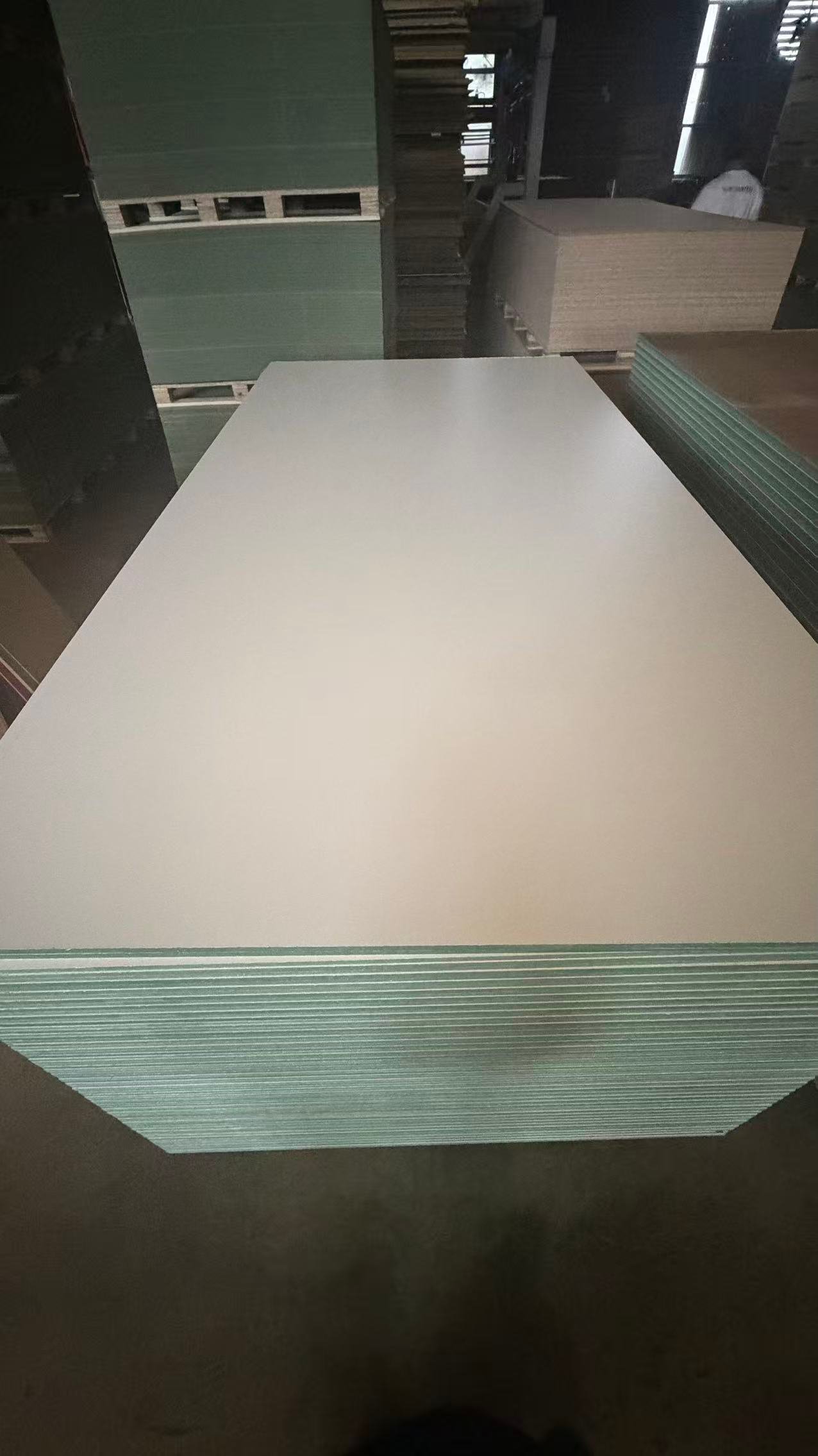
If you regularly buy MDF, plywood or particle board, you have probably seen terms such as E1, E0, ENF and CARB P2 on suppliers’ quotations.
You might ask three suppliers for the same 18 mm MDF. One quotes E1, another recommends E0, and the third says its boards meet CARB P2 requirements.
So which one should you choose? Does a stricter emission grade automatically mean a better board? And which requirements matter if you are importing panels from China?
The answer is not as simple as lining up the labels from lowest to highest.
E0, E1 and CARB P2 are not grades within one universal international system. Different countries may use different standards, test methods and compliance procedures.
If you are buying a full container of MDF, what matters most is not choosing the most impressive-looking label. It is making sure the panels are suitable for their intended use and meet the requirements of the market where you will sell them.
Let's look at what these terms mean in practice and what is worth checking before you place an order.
1. E0 vs E1: Is E0 Always the Better Choice?
Let's start with two grades that buyers often come across when sourcing MDF from China: E1 and E0.
Under China's GB/T 39600-2021 standard, Classification of Formaldehyde Emission of Wood-Based Panels and Finishing Products, the following three classes apply to wood-based panels and products for indoor use:
| Class | Formaldehyde emission limit |
|---|---|
| E1 | ≤ 0.124 mg/m³ |
| E0 | ≤ 0.050 mg/m³ |
| ENF | ≤ 0.025 mg/m³ |
These values are determined using the environmental chamber test method specified by the applicable standard.
Under the same standard and testing conditions, a lower limit means less formaldehyde is permitted to be released. E0 therefore has a stricter emission limit than E1, and ENF is stricter still.
But there is one common misunderstanding worth clearing up:
A stricter formaldehyde emission class does not automatically mean that every other property of the board is better.
Suppose you are buying MDF to make wardrobes.
One supplier offers E0 MDF, but the density is too low for your machining process, and the edges tend to give you trouble after cutting.
Another supplier offers E1 MDF with a density and internal bond strength better suited to your equipment.
Which panel is the better choice for your factory?
That depends on the application, the machining performance you need and, of course, the regulatory requirements of your target market—not just the emission class.
And if your customer specifies E0, an E1 board must not be supplied as an E0 board.
The key point is that emission performance and mechanical or machining performance need to be checked separately.
Also, E0 does not mean “zero formaldehyde.” It means the product meets a defined emission limit under the specified test conditions.
2. What Is ENF, and Is It Worth Paying More For?
Some buyers request ENF when sourcing panels for higher-end furniture.
Under China's GB/T 39600-2021 classification, ENF has a formaldehyde emission limit of ≤ 0.025 mg/m³, stricter than E0.
For furniture manufacturers seeking lower formaldehyde emissions, ENF may be worth considering.
But we would not recommend asking for the most stringent class automatically, without thinking about who will actually buy the panels.
Imagine you are a wood-panel distributor.
Most of your customers are local factories making standard office furniture. They care about price, consistent machining performance and compliance with local regulations.
If you order a specification far above what those customers need—and cannot recover the extra cost in your selling price—it may not be the best commercial choice.
On the other hand, if you supply a furniture brand with demanding low-emission specifications, a lower-emission panel may be well worth the investment.
One more distinction matters:
ENF is an emission classification. It does not, by itself, prove that the adhesive was made without added formaldehyde.
An adhesive formulation and the measured emissions from the finished panel are two different things.
If your customer requires both a no-added-formaldehyde adhesive and a specific emission limit, list these as two separate requirements in your purchase specification.
3. Why Do Some Markets Still Ask for E2 Panels?
If you import panels from China regularly, you may have noticed that buyers in different countries do not all request the same formaldehyde emission class.
Some prefer E0 or E1. In other markets, E2 remains a familiar commercial specification used by some buyers.
That is understandable.
Product positioning, local market expectations, cost structures and buying habits differ from country to country. Importers have to consider the intended use, customer demand, price and the regulations that apply where the panels will be sold.
There has, however, been an important change in China's standards.
On 1 June 2026, GB 18580-2025 came into effect, setting requirements for indoor wood-based panels and wood-based panel products within its scope:
- Wood-based panels: The emission limit must meet E1, no more than 0.124 mg/m³.
- Wood-based panel products: The emission limit must meet E0, no more than 0.050 mg/m³.
E2 is not a compliance class under this current mandatory Chinese standard.
That does not mean every market in the world uses the same product classifications or purchasing terminology as China.
If you normally buy panels under an E2 specification, it is sensible to clarify what that designation means in your market, which technical criteria and test method it refers to, and what rules apply in the country where the goods will ultimately be sold.
As suppliers, our job is not to tell buyers which class they ought to purchase. It is to understand what they actually need.
Whether your requirement is E1, E0 or ENF, or you are accustomed to using the term E2, confirm the product specifications, actual formaldehyde emission test results and destination-market requirements before placing an order.
A suitable panel needs to work for your application and your budget—and comply with the requirements of its intended market.
4. Selling MDF in the United States: Is an E0 Label Enough?
No, not on its own.
This is one point we especially want overseas importers to understand.
Suppose you order E0 MDF from China, intending to import it into the United States and sell it to furniture manufacturers there.
You may think that because E0 has a low emission limit, there should be no problem.
However, the United States has its own regulatory framework for formaldehyde emissions from composite wood products.
Products covered by the regulations must meet the applicable requirements of the US Environmental Protection Agency (EPA) under TSCA Title VI.
CARB Phase 2, often shortened to CARB P2, refers to requirements originating in the state of California.
Under the EPA framework, the relevant emission limits vary by product type:
| Panel type | US formaldehyde emission limit |
|---|---|
| MDF | 0.11 ppm |
| Thin MDF (≤ 8 mm) | 0.13 ppm |
| Particleboard | 0.09 ppm |
| Hardwood plywood covered by the rules | 0.05 ppm |
There are two common mistakes to avoid here.
First, do not compare the numbers alone.
Chinese standards commonly express results in mg/m³, whereas the relevant US limits are expressed in ppm.
More importantly, the two regulatory systems may also use different test methods, test conditions and compliance procedures.
You cannot assume that an E0 report replaces a US certification requirement simply because its numerical limit looks lower.
Second, passing one test is not the same as meeting all US compliance requirements.
TSCA Title VI covers more than emission limits. It also includes requirements relating to third-party certification, labeling, quality control and records.
Manufacturers of covered products generally need certification through an EPA-recognized third-party certifier.
The relevant US transition periods have already ended. Printing “CARB P2” on the packaging, without the certification and labeling required under TSCA Title VI, should not be treated as proof of compliance with current US market-entry rules.
So if you are shipping to the United States, tell your supplier before production begins.
Ask whether the quoted product has the applicable TSCA Title VI certification, and which supporting documents the supplier can provide.
It is much easier to confirm this before ordering than to discover missing paperwork after the goods are manufactured—or already at a US port.
5. What About MDF Destined for Europe?
The European market also deserves careful attention.
Some buyers have traditionally requested E1 panels. But an E1 label alone does not establish that every product meets all current EU requirements.
Under Commission Regulation (EU) 2023/1464, the EU introduced additional formaldehyde emission restrictions covering, among other things, furniture and wood-based articles.
After 6 August 2026, furniture and wood-based articles within the scope of Regulation (EU) 2023/1464 must not be placed on the EU market if their formaldehyde release exceeds 0.062 mg/m³ under the test conditions in Appendix 14. The regulation provides specific exemptions.
You might notice that China's E0 limit, 0.050 mg/m³, looks lower than the EU figure of 0.062 mg/m³.
Does that mean an E0 panel automatically complies with the EU rules?
Not necessarily.
Different standards may have different requirements for specimen preparation, testing conditions and assessment of results.
A Chinese E0 test report can be useful evidence when assessing a product. But the label alone is not enough to establish conformity with the relevant EU rules.
If you supply European furniture manufacturers, ask your customer to confirm the specific regulations, test methods and documents they need before you order.
And where panels are laminated, processed or assembled into furniture, consider the rules applying to the finished article—not only a report for the original raw MDF.
6. Buyers in the Middle East or Africa: Do You Need CARB P2?
Not necessarily.
For panels sold in the UAE, Saudi Arabia, Guinea or other markets, start with the import and product rules of the destination country, then consider what your own customers require.
For example, imagine you import wood panels into Dubai and mainly supply local wardrobe and cabinet manufacturers.
You are likely to be asking questions such as:
- Will the panels meet local import and sales requirements?
- Do the furniture factories specify a particular formaldehyde emission class?
- Do my customers prefer E1, E0 or another specification?
- If I move to a lower-emission product, will the market accept the additional cost?
There is no single answer that works for every buyer in every country.
Even within one market, different furniture brands, projects and retailers may have different specifications.
The most useful approach is to identify the final market and intended use first, then decide which product grade and test documents to request.
If CARB P2 is not required by local rules or your customers, there is no reason to make that label a purchasing condition merely because it sounds more advanced.
Of course, if your customer intends to export finished furniture to the United States, the situation changes.
In that case, consider the US requirements applying to the furniture and the composite wood products used to make it.
7. Your Supplier Has Sent a Test Report. What Should You Check?
This may be the most practical part of the whole article.
Many buyers ask their Chinese supplier for a formaldehyde emission test report.
A PDF arrives with the testing laboratory's name, product photos, numerical results and a “pass” conclusion.
It looks official.
But before you confirm your order, take another careful look.
Does the report cover the product you are actually buying?
Suppose you are ordering 18 mm moisture-resistant MDF.
The supplier sends you a report for a different type of standard MDF.
That does not necessarily mean anything is wrong, but you need to establish whether the report's scope actually covers your product.
Different formulations, product types or processing stages may require separate testing.
Which test standard was used?
Does the report cite GB/T 39600-2021, a particular EN standard, or a test method associated with US TSCA Title VI?
Results produced under different standards cannot simply be treated as interchangeable.
When was the report issued, and can you verify it?
Check the issue date, the issuing laboratory and whether the report can be verified through the laboratory's official channels.
For a larger purchase, you can also contact the laboratory to confirm authenticity, validity and scope.
Does it show the actual test results?
Do not stop at the word “pass.” Check the measured result, test method, sample description and the basis for the pass/fail decision.
A report may demonstrate that one sample met a limit under specified conditions. It does not automatically guarantee identical performance from every future production batch.
What exactly does the certification cover?
For the US market in particular, a one-off sample test report is not the same as the third-party certification required by regulation.
If a supplier says a product is certified, ask which body issued the certification, which manufacturing facility is covered, and which product categories fall within its scope.
A few questions now are much easier to deal with than a dispute after the shipment arrives.
8. How to Put the Right Emission Requirements in Your Inquiry
If you already know the emission class your customer needs, state both the product specification and the standard number in your inquiry.
For example, suppose you are importing MDF for a furniture manufacturer in the UAE. Your request might look like this:
| Inquiry item | Example specification |
|---|---|
| Product | Raw MDF |
| Size | 1220 × 2440 mm |
| Thickness | 18 mm |
| Density | Approximately 700 kg/m³ |
| Emission requirement | E0 according to GB/T 39600-2021 |
| Quantity | 1 × 40HQ |
| Destination port | Jebel Ali, UAE |
| Application | Furniture and cabinet manufacturing |
| Additional request | Please confirm the applicable test method and provide relevant formaldehyde emission test documentation for the quoted product. |
This gives the supplier a much clearer picture of what you need.
It also makes it easier to compare quotations from different suppliers against the same requirements.
If your goods are destined for the US or EU, specify the relevant local rules and required compliance documents as well. Do not rely on “E0” or “E1” as a substitute.
And if you are not sure which standard to request yet, that is fine.
Start by telling the supplier your destination country, how the panels will be used, and what your downstream customers expect. Then ask them to suggest an appropriate product and explain the options.
9. Don't Let the Emission Label Become Your Only Buying Criterion
Formaldehyde emissions matter, especially for furniture and interior applications.
But they are only one part of a panel's full specification.
Imagine buying MDF that meets the required emission limit but has inconsistent density, excessive thickness variation or poor performance on your CNC machines.
Even if it passes the emission test, the shipment could still create problems for your factory.
That is why we encourage buyers to review the complete product specification.
For MDF, consider density, internal bond strength, thickness tolerance, surface quality and the intended machining process alongside the emission requirement.
For plywood, you should also consider the core, bond quality, internal gaps, moisture content and surface grade.
The best panel is not necessarily the one with the most labels or the highest price. It is the one that meets your market's requirements, works for your application and can be supplied consistently.
Buying MDF from China? Let's Start with Your Requirements.
SOWO is based in Linyi, Shandong, China, and supplies MDF, plywood, particle board and decorative panels.
We know buyers in different markets can have very different priorities.
Some care most about machining performance. Others need to control costs. Some must meet specific formaldehyde emission requirements.
If you are unsure whether E1, E0 or ENF is appropriate—or are sourcing panels for a market such as the United States or Europe—tell us where the product is going and what it will be used for.
We can start with the specifications and work through the available options and documents that need to be verified.
You do not need to have every technical detail finalized before you first contact us.
Tell us where you plan to sell the boards and what you plan to do with them. That's a good place to start.
Official Standards and Regulations Referenced
- China — GB/T 39600-2021, Classification of Formaldehyde Emission of Wood-Based Panels and Finishing Products official source
- China — GB 18580-2025, Limit of Formaldehyde Emission of Wood-Based Panels and Finishing Products for Interior Decoration and Refurbishing Materials official source
- United States — US EPA, Formaldehyde Emission Standards for Composite Wood Products official source
- European Union — Commission Regulation (EU) 2023/1464 official source
Note: This article is intended to explain common purchasing standards and related risks. Import rules, certification scope, test methods and implementation requirements should be verified against the specific product, destination market and the latest guidance from the relevant authorities.
Discuss your panel requirements with SOWO
Tell us the panel type, size, thickness, quantity and destination. We can review the specification and prepare a quotation.
Request a Quote