
Panel Buying Guide
MDF vs Particle Board vs Plywood: Which Panel Should You Choose for Furniture?
Compare MDF, particle board and plywood for furniture production. Learn the differences in surface quality, machining, strength, screw holding, weight, moisture resistance and cost.
MDF, particle board and plywood are three of the most widely used wood-based panels in furniture manufacturing.
They may all be used for cabinets, wardrobes, shelves and interior furniture, but they are not interchangeable in every application.
The right material depends on:
- Furniture design
- Surface finish
- Machining
- Structural requirements
- Moisture exposure
- Target price
Understanding the differences can help manufacturers select a more suitable panel.
What Is MDF?
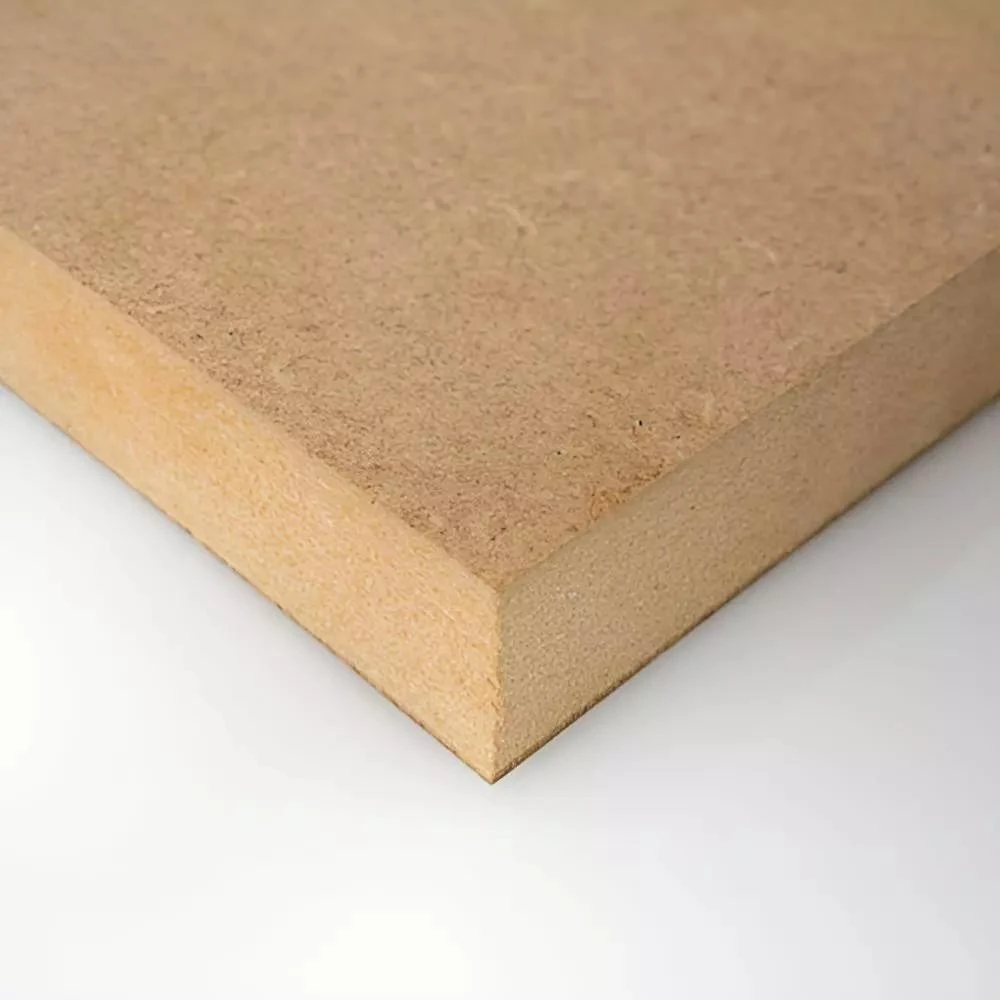
MDF, or medium-density fiberboard, is produced from refined wood fibers bonded and pressed into panels.
Its biggest advantage is its uniform structure.
Because MDF does not contain large wood chips or veneer layers, it provides a smooth and consistent surface.
MDF Advantages
MDF is often selected for:
- Painted furniture
- CNC-routed doors
- Decorative profiles
- Melamine lamination
- PVC lamination
- Interior furniture
Its smooth surface is particularly useful for decorative finishing.
MDF Considerations
Standard MDF is not designed for continuous exposure to water.
Moisture-resistant MDF is available for applications requiring improved moisture performance, but it should not automatically be treated as waterproof.
MDF can also be relatively heavy, especially at higher densities.
What Is Particle Board?
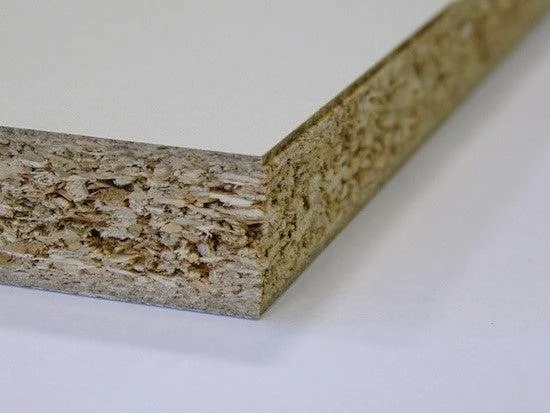
Particle board is produced from wood particles bonded with resin and pressed into panels.
It is widely used in mass furniture production.
Particle Board Advantages
Particle board can provide an economical substrate for:
- Wardrobes
- Kitchen cabinet carcasses
- Office furniture
- Shelving
- Flat-pack furniture
- Melamine-faced furniture
When covered with melamine paper or another decorative surface, particle board can provide an efficient solution for large-volume furniture production.
Particle Board Considerations
Machined edges require proper treatment.
Screw holding can also depend heavily on board density, particle distribution, screw type and edge distance.
For demanding fastening applications, the design should be tested before mass production.
What Is Plywood?
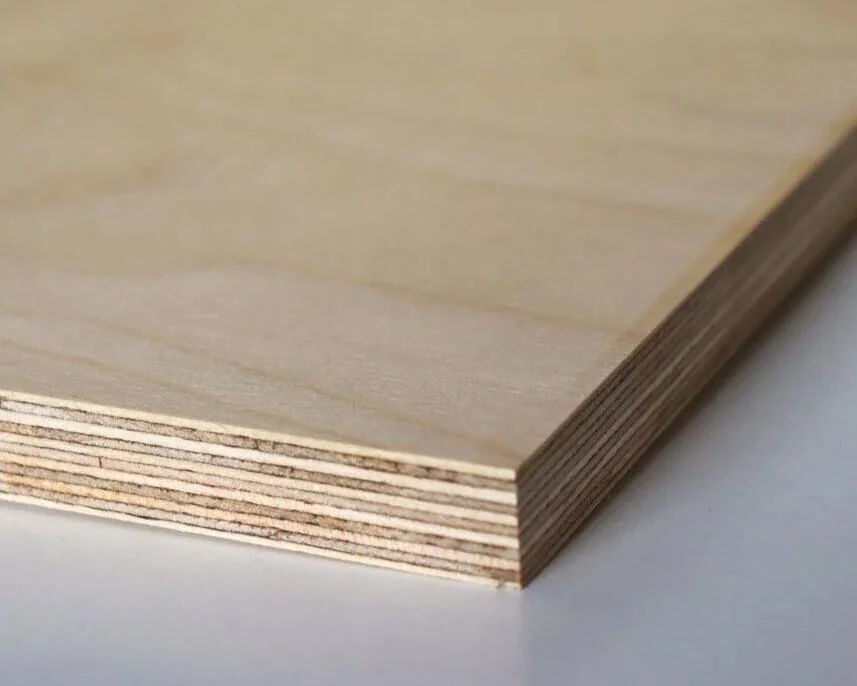
Plywood is produced from multiple wood veneer layers bonded together, normally with alternating grain directions.
This layered structure gives plywood different mechanical characteristics from MDF and particle board.
Plywood Advantages
Plywood is often selected where manufacturers want:
- Higher structural strength
- Better edge performance
- Stronger fastening
- Lower risk of brittle edge damage
- A panel with layered wood construction
It may be used for:
- Cabinet structures
- Furniture frames
- Shelving
- Interior construction
- Components requiring improved mechanical performance
Plywood Considerations
Surface uniformity depends on veneer grade and sanding.
Plywood can also show natural variation because it is made from veneers rather than refined fibers.
For painted or high-gloss applications, additional surface preparation may be necessary.
Which Has the Smoothest Surface?
MDF normally provides the most uniform raw surface.
This makes it particularly suitable for:
- Painting
- CNC routing
- Decorative finishing
Particle board normally relies more heavily on the applied decorative surface.
Plywood surface quality varies depending on face veneer grade and sanding.
Which Has Better Screw Holding?
There is no universal number because performance depends on board specification and fastener design.
However, plywood generally performs well in applications where mechanical fastening and edge strength are important.
MDF and particle board can also provide acceptable screw holding when:
- Correct density is used
- Proper screws are selected
- Pilot holes are designed correctly
- Edge distance is sufficient
Furniture design should be matched to the material rather than treating all panels the same.
Which Is More Moisture Resistant?
The answer depends on the grade.
Standard MDF and standard particle board have limited resistance to prolonged moisture exposure.
Moisture-resistant grades are available.
Plywood can also be produced with different glue systems and veneer qualities for different moisture environments.
Therefore, buyers should compare the actual product specification rather than only the panel name.
Which Is Cheapest?
Particle board is often selected for price-sensitive furniture production.
However, total cost also includes:
- Machining
- Lamination
- Edge banding
- Hardware
- Rejected panels
- Transportation
- Assembly
The cheapest raw board does not always result in the lowest finished furniture cost.
How Should Furniture Manufacturers Choose?
Choose MDF when:
- Smooth surfaces are important
- CNC routing is required
- Painted finishes are used
Choose particle board when:
- Cost efficiency is important
- Melamine-faced furniture is being produced
- Large-volume flat furniture is required
Choose plywood when:
- Structural performance is important
- Better edge strength is required
- Strong fastening is needed
These are general guidelines.
Actual product selection should always be based on the furniture design.
Final Thoughts
MDF, particle board and plywood all have important roles in furniture manufacturing.
There is no single panel that is best for every product.
A better purchasing decision considers:
- Required finish
- Machining
- Strength
- Weight
- Moisture
- Fastening
- Budget
SOWO Panels supplies MDF, particle board and plywood in different specifications for furniture and interior applications. Send us your application, dimensions, thickness, quantity and destination to discuss the most suitable panel specification.
Discuss your panel specification with SOWO
Send the panel type, dimensions, thickness, quantity and destination so we can review the requirements for your quotation.
Request a Quote